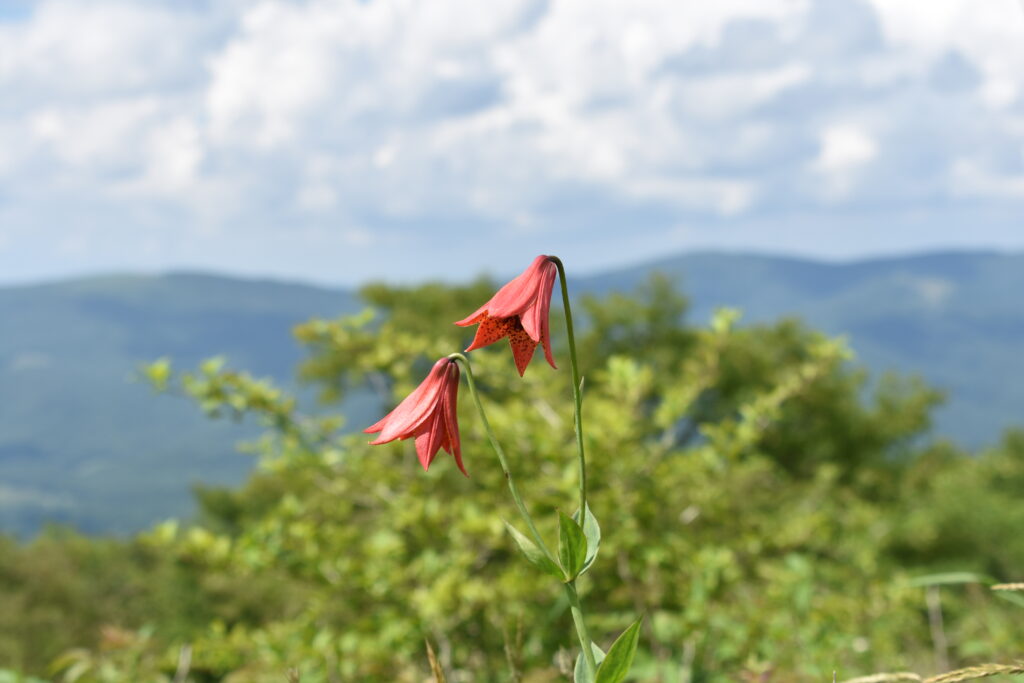
Lilium grayi (Liliaceae), or Gray’s Lily, is a rare, threatened, perennial herb endemic to high elevations in the Southern Appalachians. Once more widespread, it is now restricted to 46 occurrences across 15 counties. Lilium grayi faces numerous threats, including limited distribution, habitat loss, small and fragmented populations, and reproductive failure caused by an invasive fungal pathogen. Despite these concerns, no prior studies have assessed the species’ genetic diversity or population structure—critical data for informed conservation planning. Here, we analyzed 19 populations of L. grayi, including four putative hybrid populations of L. ×pseudograyi, using 11 microsatellite loci. Contrary to expectations for a rare and fragmented species, we found moderate levels of genetic diversity and little genetic differentiation among populations, suggesting substantial gene flow, likely facilitated by the species’ long-distance migratory hummingbird pollinator. Population structure analyses (DAPC, STRUCTURE, AMOVA) supported this high connectivity, revealing no clear geographic clustering. Hybrid populations, by contrast, exhibited lower genetic diversity and higher fixation indices, indicating increased isolation and inbreeding. These findings provide an essential genetic baseline for L. grayi, highlight the importance of continued monitoring, and suggest that conservation efforts should prioritize preserving both genetic diversity and connectivity among populations to enhance resilience in the face of ongoing threats.