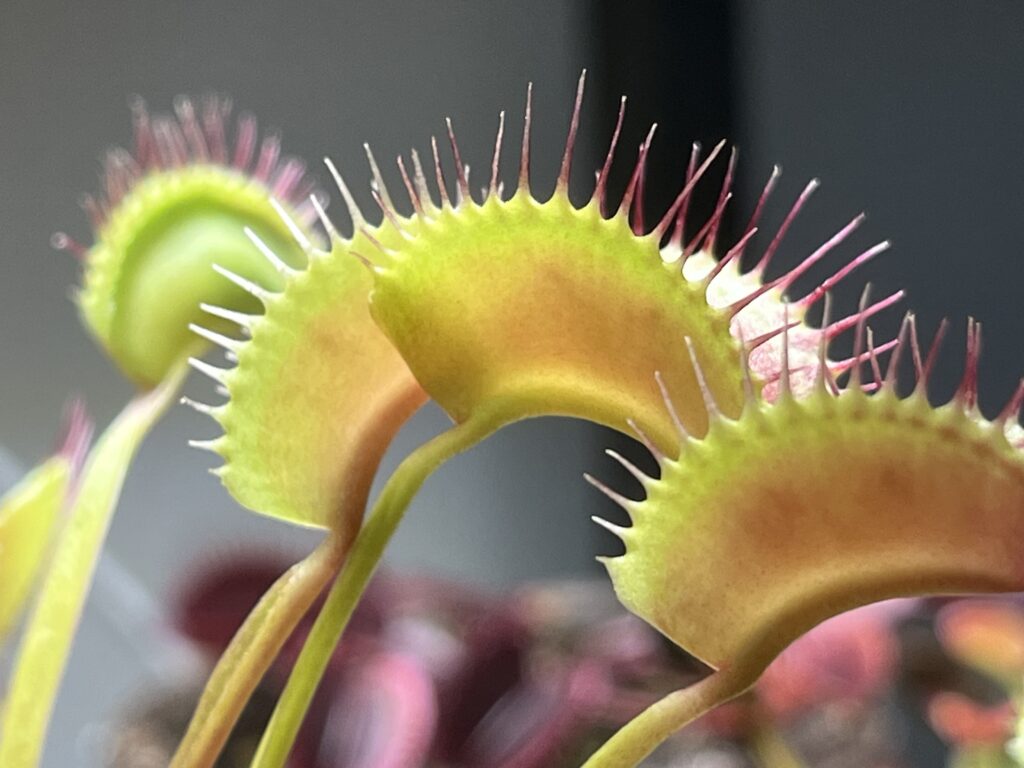
Carnivorous plants rely on prey digestion to supplement nutrient acquisition in low-nutrient habitats, yet the physiological costs of this adaptation remain understudied. Here, we test whether carnivory engages stress programs at the expense of photosynthesis (Givnish model) by profiling Venus flytrap (Dionaea muscipula) gene expression across a time series of prey capture and digestion. Using a transcriptome-guided RNA-seq analysis, we quantify trap-wide responses in a curated set of 75 stress associated genes spanning oxidative detoxification, protein folding, and signal transduction. We find minimal activation following mechanical stimulation alone, but significant upregulation during prey digestion, particularly at 12–72 h. Summed transcripts per million (TPM) and differential expression analyses indicate that prey presence, not closure per se, is the primary driver of stress signaling. We extend this analysis with a targeted photosynthesis gene panel, which reveals an early (3 h) onset and pronounced late (48–72 h) suppression of PSI/PSII core, antenna, and ATP synthase transcripts in traps with prey, consistent with a selective, digestion-coupled down-regulation of the light-harvesting/ photochemical apparatus.