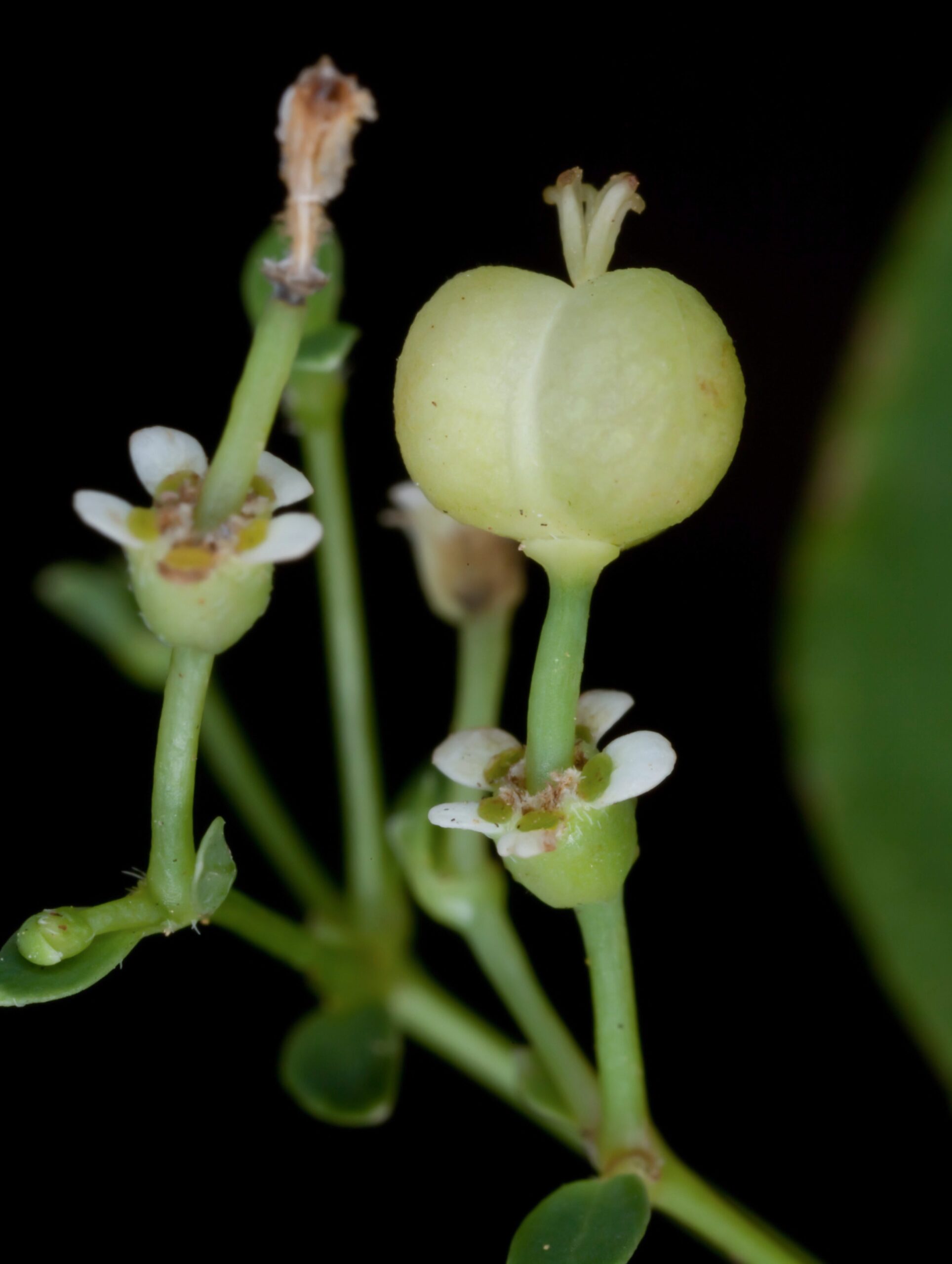
Unusual individuals of the Euphorbia corollata (Euphorbiaceae) complex were encountered during field work in mature, closed-canopy, hardwood forests on limestone-derived substrate associated with the Jackson Prairie of Mississippi. Subsequent examination of herbarium specimens of Euphorbia from the southeastern United States yielded similar individuals from Alabama, Florida, Georgia, South Carolina, and North Carolina. Unlike the sympatric E. corollata and E. pubentissima, these individuals have longer petioles, broader leaves with pilose margins, smaller cyathia, different phenology, and occupy different habitats. To test species boundaries, morphological character dif-ferences were explored using principal component analysis (PCA), significant differences between groups were tested using multivariate analysis of variance (MANOVA) followed by Tukey post-hoc test, and additional characters were gathered from plastid (rpL16) and nuclear (ITS) DNA data of the unusual individuals in addition to E. corollata, E. pubentissima, and all other commonly recognized species of Euphorbia sect. Tithymalopsis occurring in eastern North America. The PCA indicates that the individuals are usually morphologically distinct, and DNA data indicate that they often have unique sequences different from E. corollata or E. pubentissima. These data support our hypothesis that the unusual plants represent an overlooked species, which was previously named Euphorbia apocynifolia Small. In addition, our phylogenetic analyses of DNA data are not fully congruent with recent hypotheses of intra-sectional relationships based on morphology.