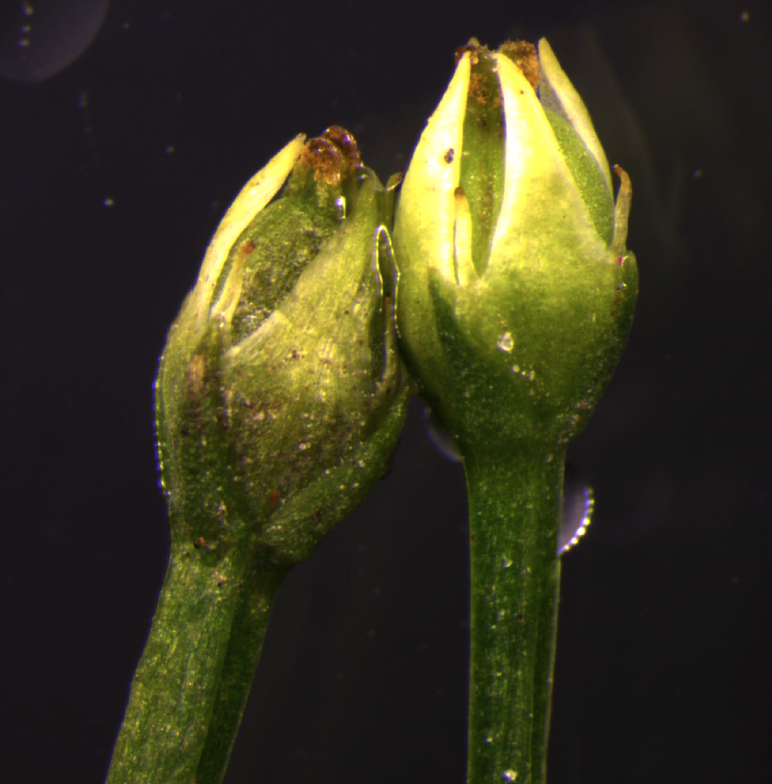
Bartonia paniculata subsp. texana is an endemic, imperiled plant occurring within the baygalls (i.e., forested seep bogs) of the West Gulf Coastal Plain Forested seep (Southern Type; WGCPFS- ST) habitats of Southeast Texas, which are also considered rare plant communities. The number of individuals and populations have both declined by 50% over the last 57 years. Yet, niche preferences within the WGCP-FS-ST of B. paniculata subsp. texana are not characterized, which could enable targeted surveys to identify additional populations and to restore degraded habitats. We investigated whether plant communities and environmental conditions within baygalls that support B. paniculata subsp. texana were distinguishable from locations that do not support the taxon, to guide future surveys and conservation efforts. Baygall habitats within the WGCP-FS-ST region of Southeast Texas were surveyed. We compared vegetation composition, canopy openness, ground cover, and soil properties between baygall sites that consistently support B. paniculata subsp. texana and those that do not. Our results indicate that B. paniculata subsp. texana prefers narrow niches within its baygall habitat. These areas are characterized by distinguishable understory vegetation composition (Shannon-Wiener Index=1.4, Simpson Index=0.62), canopy openness (16%), ground cover (live vegetation=68%, debris=11%, bare soil=30%), and soil moisture (23%) as compared to bay-galls that do not consistently support the taxon. However, overstory vegetation and soil physicochemical properties between occupied and unoccupied sites were similar. The presence of B. paniculata subsp. texana is associated with specific understory vegetation and microhabitat conditions. These findings provide valuable criteria for identifying additional populations and prioritizing areas for habitat restoration.