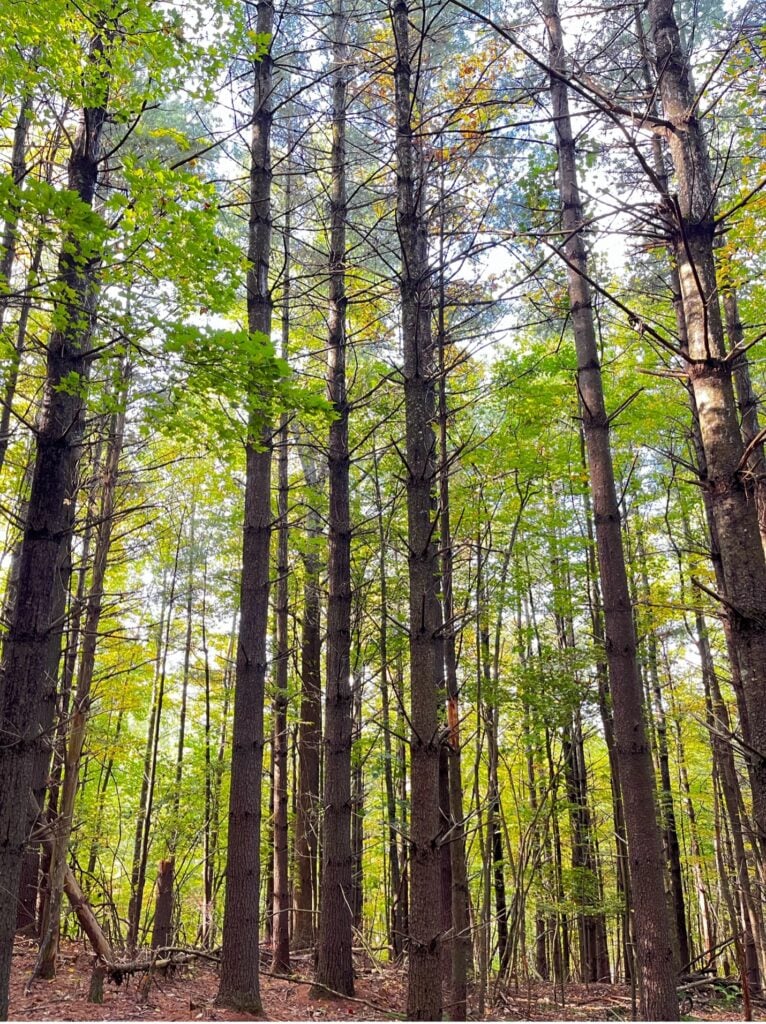
Nitrogen (N) availability is shifting across forest ecosystems due to spatial variation in atmospheric N deposition and changing biogeochemical dynamics under global change. These shifts in N supply have implications for woody debris decomposition, a key process regulating carbon (C) turnover and storage in forests. Because wood is typically low in N, changes in external N availability can alter microbial activity and decomposition pathways, influencing both the rate and fate of C during decay. This study investigates how low-level N enrichment (5 kg N ha–1 yr–1) affects the wood decomposition of two common tree species, Liriodendron tulipifera and Pinus strobus, in Southern Appalachian forests over a one-year period. We hypothesized that L. tulipifera would experience greater mass loss than P. strobus due to faster decomposition, and that N enrichment would accelerate decomposition of both species. Species Liriodendron tulipifera and P. strobus differed in wood chemical composition, particularly in lignin and cellulose content. In contrast, N enrichment had a minimal impact on decomposition dynamics. These results suggest that species is the dominant driver of early-stage wood decomposition. Given the short duration of this study and low rate of N enrichment, further research is needed to determine how these dynamics unfold over time and at what threshold N enrichment alters decomposition trajectories. As global changes reshape forest composition and nutrient patterns, understanding the combined influence of wood chemistry and nutrient availability will be essential for accurately predicting C storage in forest ecosystems.