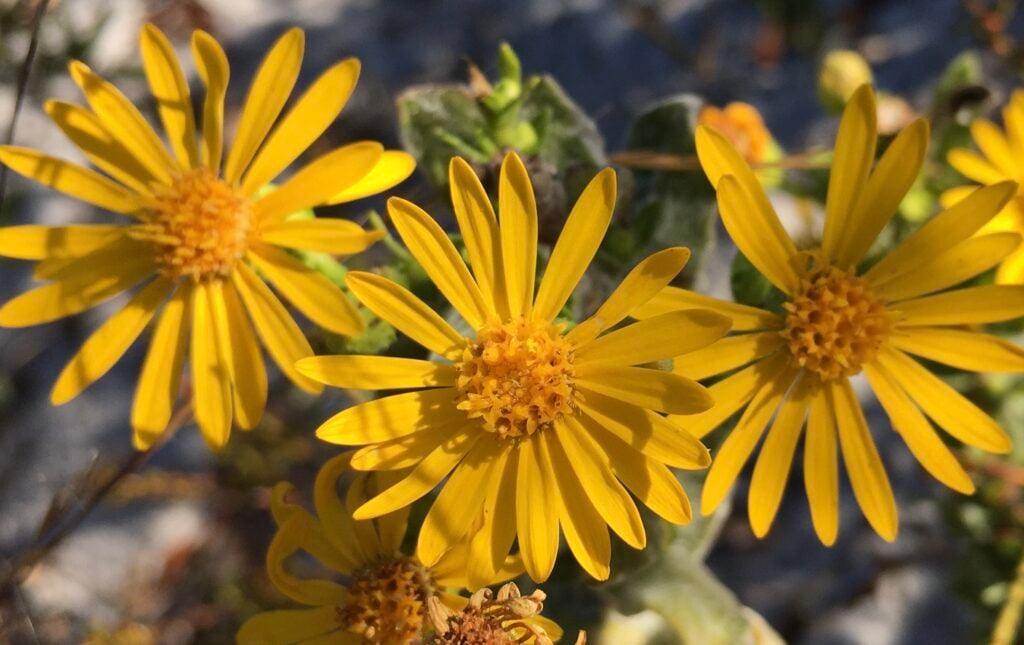
Chrysopsis highlandsensis (Highlands Goldenaster; Asteraceae) is a state endangered herb found primarily within pyrogenic scrub communities in south-central Florida. Little is known of its ecology, including population trends, demography, response to fire, and seed ecology. Here, we report on the first detailed demographic study of C. highlandsensis over 24 years of field monitoring across 10 populations (6,456 plants) and supplemental surveys and experiments to investigate (1) population trends and vital rates in scrub and roadside habitat, (2) seed ecology, and (3) rangewide population trends. Seedling recruitment occurred year-round, primarily during the winter dry season following flowering (Dec–Mar), and large recruitment events were not associated with fire or mechanical disturbances. Although burning reduced survival, 39% of individuals (>1 year old) that experienced fire survived. Roadside vegetative plants transitioned to reproductive adults at smaller sizes (rosette diameter) than did those in the scrub. Reproductive individuals lived a mean of 4.3 years (max. 12 years). Mortality occurred following the first reproductive event in 87% of individuals, indicative of a largely monocarpic life cycle. Viability of intact seeds was estimated at 20%. Across five field germination experiments, germination ranged from 1.0–8.6%, and the maximum observed seed bank duration was five years. Seed predation by vertebrates accounted for a 23% decline in seed numbers. Rangewide surveys showed significant declines in five of seven sites from 2005–2020. Together, these findings indicate that populations are generally declining, and that several factors, particularly low reproductive output and seedling recruitment, likely limit population growth.