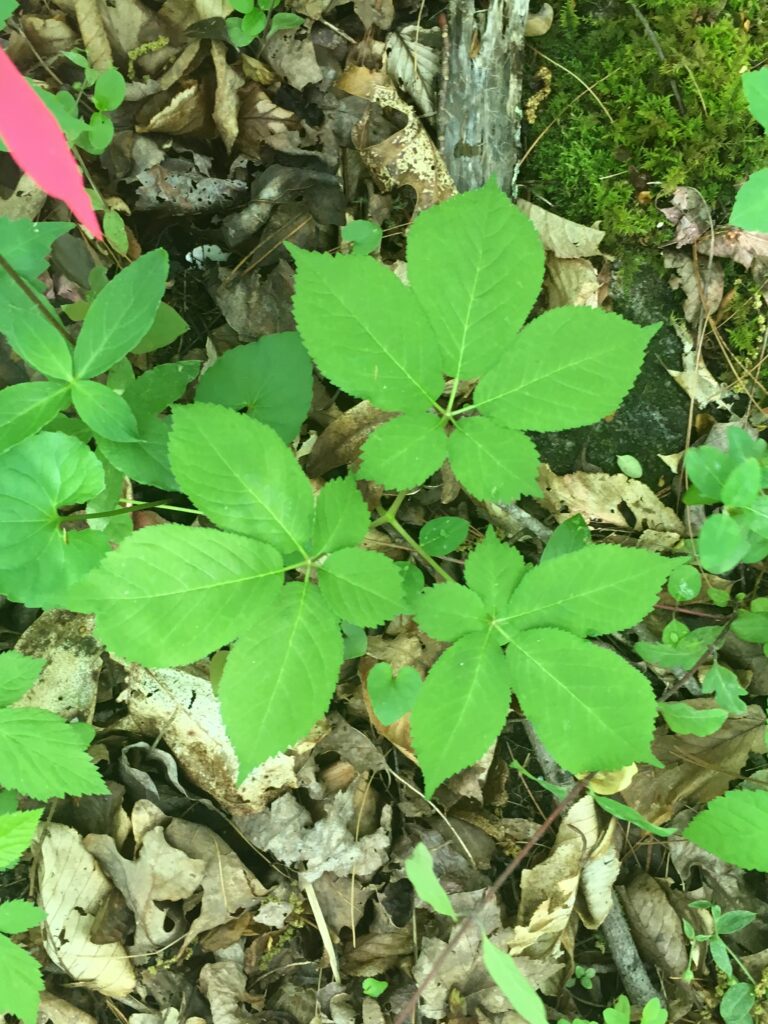
American ginseng (Panax quinquefolius) is a prized forest botanical harvested for its production of a variety of medicinal compounds, called ginsenosides, in its roots. These ginsenosides have differing pharmacological effects and their amounts vary from plant to plant resulting in distinct chemotypes. This variation in some ginsenosides is genetic, while in others it is environmentally influenced, or results from genetic and environmental interactions. One method for determining genetic versus environmental influences on plant phenotype is to grow genetically identical individuals in different environments. American ginseng has determinate growth, making it difficult to clone using traditional methods. This study attempted cloning by planting root segments (whole roots with and without a rhizome and proximal and distal root segments) from whole plants into two forested sites. Of the 97 whole plants used, clones were generated from 25 (25.7%). Most clones came from plants that could be split into two whole roots (with or without attached rhizome) because of root forking, only four (7.8%) of the 51 roots that were split into proximal and distal segments produced clones. The study builds on the limited body of work on cloning American ginseng from root cuttings. Prioritizing plants that had significant side roots, and/or applying plant growth hormones to encourage fine root formation may enhance cloning success. Producing genetically identical clones would allow for further exploration of genetic and environmental factors affecting ginsenoside production and could provide growers the ability to propagate individuals that have a desirable chemotype for commercialization of target treatment products and regionally distinct brands.